
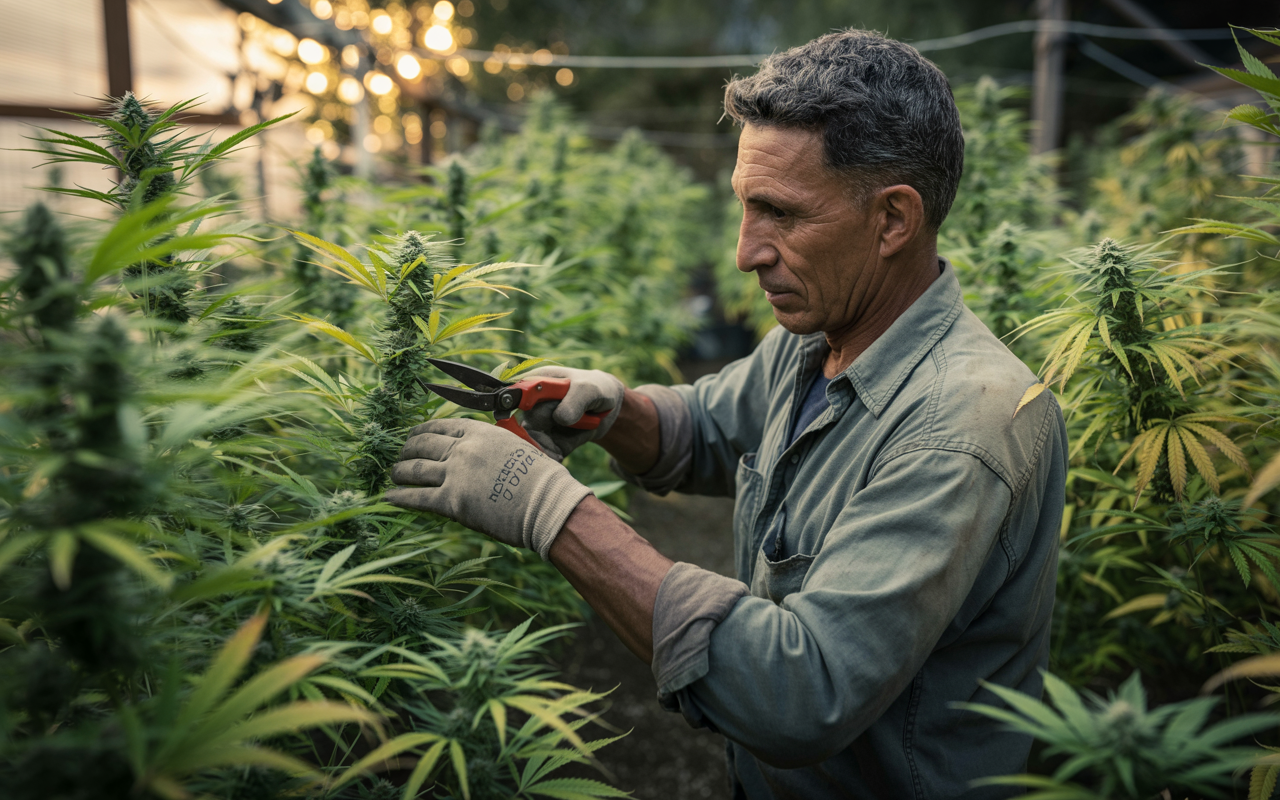
The right harvest time is crucial for the quality, potency, and flavor of cannabis. Harvesting too early can result in weak buds and low THC levels, while harvesting too late can diminish flavor and increase the risk of mold.
- Looking at the trichomes
Trichomes are the tiny resin glands on buds and leaves, and provide important information about ripeness:
Transparent: Plants are not ready yet, THC is not fully developed.
Milky white/opaque: maximum psychoactive effects; ideal for most growers.
Amber: THC starts to break down into CBN; effect more relaxing and physical.
Tip: Use a magnifying glass or microscope to examine trichomes closely.
- Looking at the pistils (hairs)
Pistils are the hairs on the buds that are white during flowering and later change color:
White: Buds are not yet ripe.
Brown/orange: Buds are almost ready to harvest.
Usually 70–90% discoloured: optimal harvest time.
Combining trichome and pistil color gives the most reliable indication.
- Age of the plant
Indica strains: usually flower for 7–9 weeks.
Sativa strains: flowering takes longer, 10–14 weeks.
Hybrids: Depend on genetics; follow the information from the seed bank.
This is a rough guideline; visual inspection remains important.
- Other signs of ripeness
Leaves discolouring: Some leaves turning yellow at the end of flowering is normal.
Bud structure: Buds feel firmer and resin production is visible.
Aroma: Aromas become stronger and more characteristic with ripe buds.
- Harvesting technique
Cut away large leaves to see the buds better.
Cut buds carefully to avoid damaging trichomes.
Hang the buds to dry in a cool, dark place with good ventilation.
Curing: After drying, store in glass jars to optimize flavor and potency.