
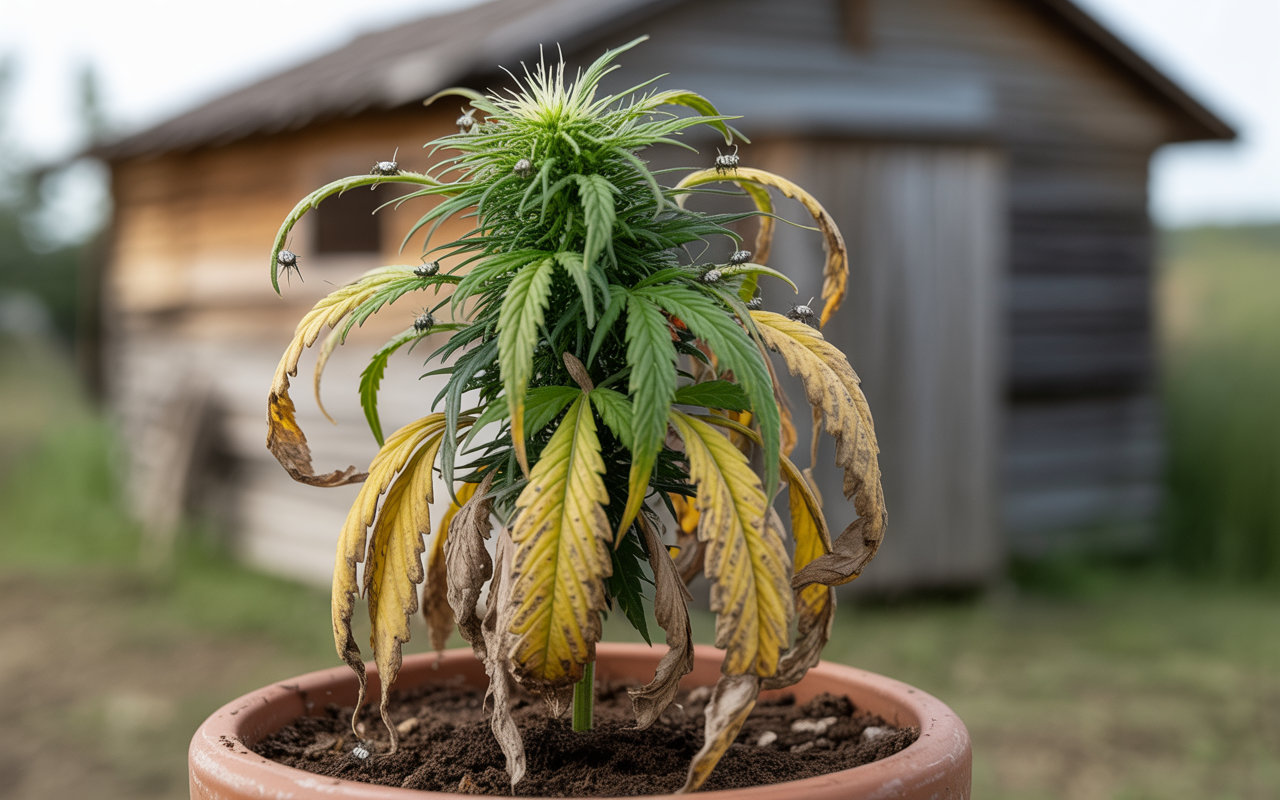
Whiteflies are one of the most common pests in cannabis cultivation. They feed on plant sap, weaken the plant, and can transmit viruses. Early detection and effective control are essential to protect yield and quality.
- Whitefly Recognition
Appearance: Small, white insects 1–2 mm in size.
Location: Usually on the underside of leaves, but will also fly up if disturbed.
Damage to plants:
Yellow, wilted or curled leaves
Sticky substance on leaves (honeydew)
Reduced growth and yield
A simple way to detect whiteflies is to hang a yellow sticky trap near the plants.
- Causes of whitefly infestations
Overcrowding in the breeding room due to lack of natural enemies.
Insufficient ventilation creating warm, humid conditions.
New contamination via outdoor plants or used materials.
- Preventive measures
Improve air circulation: Use fans to avoid stagnant air.
Hygiene: Remove dead leaves and clean the growing area regularly.
Yellow/sticky traps: monitor and reduce adult whiteflies.
Quarantine: check new plants before adding them to existing grow rooms.
- Control methods
Organic:
Neem oil: spray on leaves, has a repellent effect and suffocates larvae.
Introducing natural enemies of whiteflies: Aphidoletes, Encarsia or other beneficial insects.
Garlic or soap solutions: low toxicity, may reduce population.
Chemical:
Use only as a last resort and according to the instructions. Choose plant-safe insecticides and avoid residues on buds.
Organic methods are generally safer for the plant and the final harvest.
- Monitoring and follow-up
Check plants regularly, especially under leaves.
Remove severely affected leaves or branches to prevent spread.
Continue using yellow/sticky traps to monitor adult populations.