
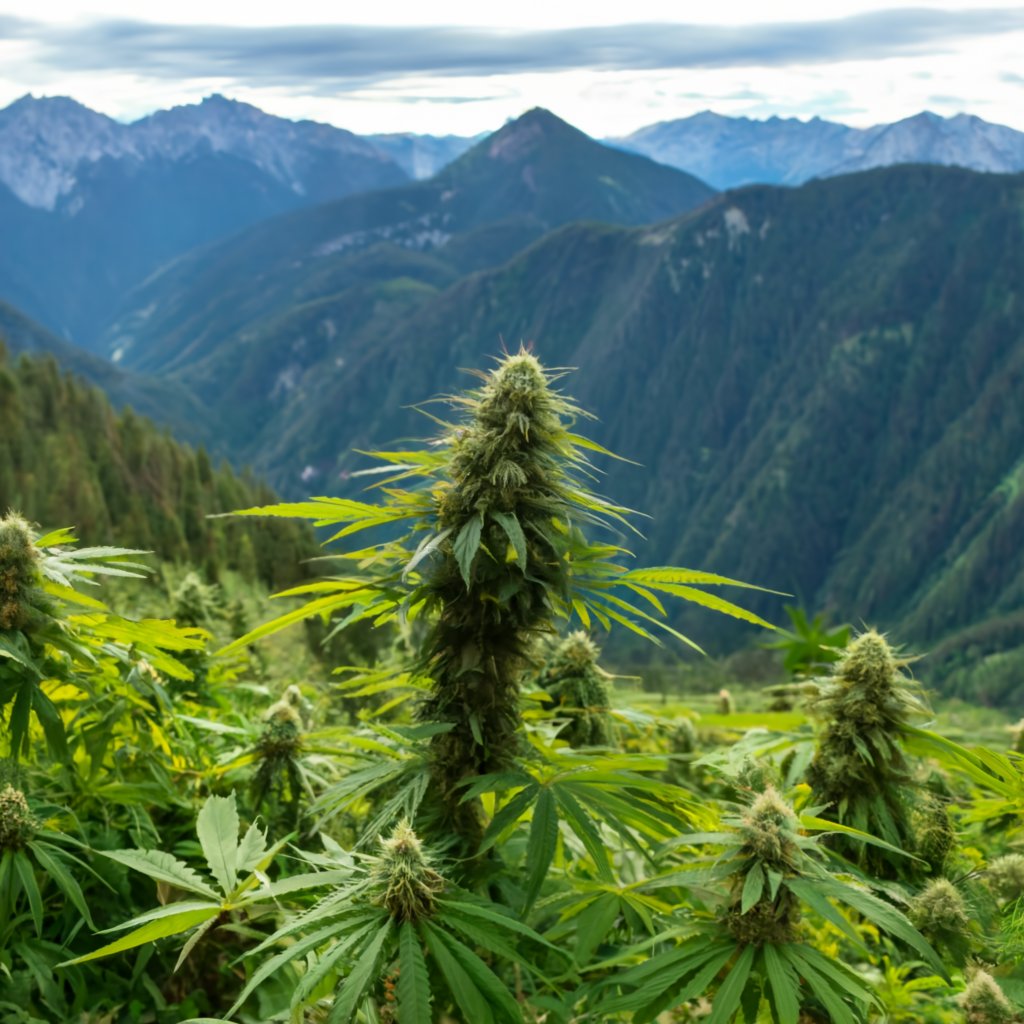
Growing cannabis in mountainous regions presents unique challenges and opportunities. Elevation, climate, temperature fluctuations, and soil conditions all influence plant growth and quality. Growers must adapt their strategies to ensure healthy plants and high yields.
- Climate factors in mountain areas
Temperature: Nights are often colder and days warmer, with large temperature fluctuations.
Sunlight: Higher elevations mean more UV radiation, which can increase cannabinoid production but can also cause stress to the plant.
Humidity: Mountain air can be drier than in lower elevations, which can promote dehydration.
Rainfall: Depending on the season, rain may suddenly increase or become limited.
- Soil and substrate
Soil quality: Mountain soils are often rocky and nutrient-poor. It's important to enrich the soil with organic fertilizers or compost.
Drainage: Ensure good drainage to prevent root rot, especially during sudden rain showers.
pH: Check and correct pH (6.0–6.8 in soil) for optimal nutrient uptake.
- Choose the right cannabis strain
Hardy landrace varieties or autoflowering strains are often more resistant to extreme conditions and shorter growing seasons.
Sativa-like strains often grow better in higher UV exposure and warm days, while indicas stay compact and tolerate cold better.
- Light and location
Choose a location with maximum sun exposure during the day.
Protect young plants from strong winds with natural barriers or windbreaks.
Consider height: Too high can increase plant stress due to low oxygen levels and intense UV radiation.
- Water management
Dry mountain air can cause rapid evaporation; check soil moisture regularly.
Use rainwater or natural sources if available, but be aware of contamination.
Mulching helps retain moisture and protect the roots from temperature fluctuations.
- Protection against stressors
Wind: Sturdy stems are needed; staking or support may be necessary.
Cold nights: cover plants with cloths or tunnels in extreme temperatures.
Pests and fungi: good ventilation and distance between plants reduces the risk of problems.
- Benefits of mountain farming
Intense flavor and aroma: Higher UV radiation increases cannabinoid and terpene production.
Robust plants: natural selection and stress lead to strong, resistant plants.
Protected location: often less risk of discovery and pests.